A Complete Guide To Visiting Hakone
An expert overview to help you experience the mountainous region of Hakone

Image Source: Kunal Sahu
Overview
Hakone is one of the most famous onsen regions in Japan, known for its close proximity to Tokyo, beautiful hot springs, and the stunning Lake Ashi. It only takes about 2 hours to get to Hakone from Tokyo, or 3.5 hours from Kyoto, making it a convenient option for seeing Mt. Fuji and a nice way to experience the natural environment Japan has to offer.
There's a lot to see and do in Hakone, such as exploring world-famous art museums, observing active volcanic vents from a cable car, and taking a ride across Lake Ashi. Combine all of this with world-famous natural onsens, plus a wide range of charming hotels and ryokans, and you'll find it's well worth the trip even if cloudy weather obscures your views of Mt. Fuji.
Hakone is a mountainous region and doesn't have a typical highly-developed central area, instead, it's comprised of 4-5 areas which make up the "Hakone Loop". A variety of amazing accommodation options are located around Hakone, with most of them offering private transport due to their locations. This is one of the biggest appeals of spending a few nights in Hakone - it offers a peaceful retreat between Tokyo and Kyoto, enabling you to have a nice break from the crowded sightseeing that usually comes with a typical Japan itinerary.
However, trying to plan a trip to Hakone can be quite a challenge, so we've organised all the information for you in the most efficient way possible.
Table of Contents
Location & Access
Navigating Around Hakone
The Best Things To Do In Hakone
FAQ
Location & Access
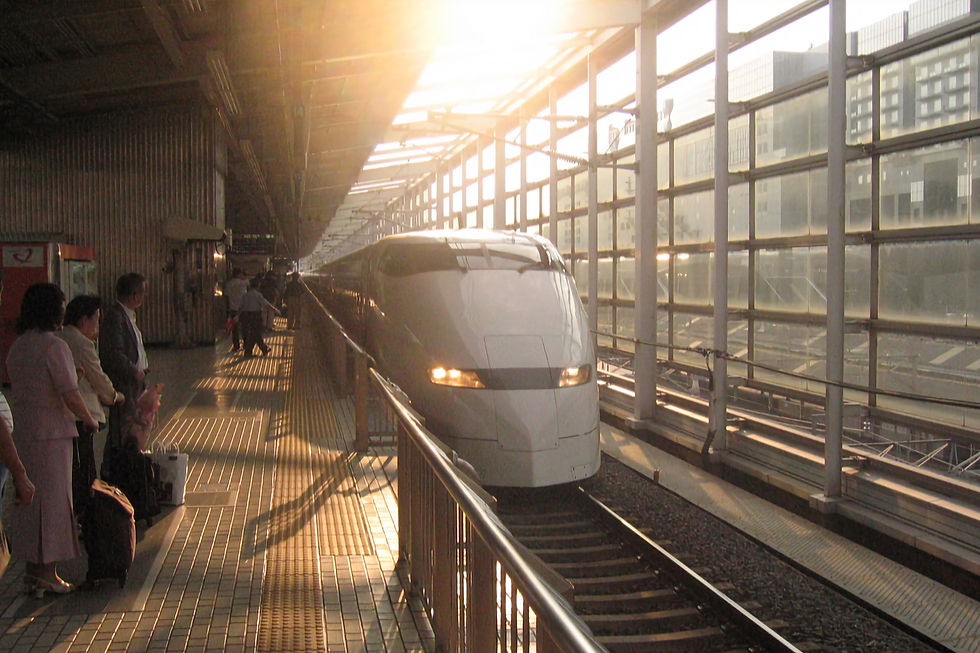
Image Source: Marcus Cook
Overview
Access to Hakone via public transport is done by catching a train to Hakone-Yumoto Station, which serves as the gateway to Hakone. There's a Shinkansen from both Tokyo and Kyoto available that takes you to a nearby town called Odawara, this is the only option which is covered under the JR Japan Pass. From Odawara, a short 15-minute train will connect you to Hakone-Yumoto Station.
Alternatively, there is a direct "romantic train" to Hakone-Yumoto Station that takes a scenic route from Shinjuku, it takes longer than the Shinkansen but doesn't require any transfers. This is the best option for travelling to Hakone because it's covered under the Hakone Free Pass, which is the best way to explore the area.
Once you arrive at the town of Yumoto (Hakone-Yumoto Station), you can make your way to Lake Ashi or the onsen town of Gora, this is done via a local train and sightseeing bus, which we'll explain further in the navigation section.
All the transport options can be a bit confusing, so we'll try to simplify things below.
Tokyo To Hakone
Scenic Option - From Shinjuku
Romantic Train - ¥2500
Shinjuku → 1.5 hours → Hakone-Yumoto
Total Time: ~ 1.5 hours
Total Cost: ~ ¥2500
Fastest Option - From Tokyo Station
JR Shinkansen - ¥3300
Tokyo Station → 34 mins → Odawara*
Local Train - ¥360
Odawara → 15 mins → Hakone-Yumoto
Total Time: ~ 1 hour
Total Cost: ~ ¥3660
*the Shinkansen is covered under the JR Pass
Cheapest Option - From Shinjuku
Odakyu Express Train - ¥1000
Shinjuku → 1.5 hours → Odawara
Local Train - ¥360
Odawara → 15 mins → Hakone-Yumoto
Total Time: ~ 2 hours
Total Cost: ~ ¥1360
Lake Ashi Option - Shinjuku Highway Bus
Shinjuku Highway Bus - ¥2600
Shinjuku → 2.5 hours → Togendai (Northern Lake Ashi)
Total Time: ~ 2.5 hours
Total Cost: ~ ¥2600
Kyoto To Hakone
There's essentially only one option for travelling to Hakone from Kyoto or Osaka, and that's by taking a Shinkansen to Odawara. However, if you're on a tight budget, then a cheaper option is to take an overnight bus to Tokyo, and then catch the Odakyu Limited Express train from Shinjuku.
Kyoto to Hakone via Odawara
JR Shinkansen ~ ¥12,000-13,000
Kyoto Station → 2-3 hours → Odawara*
Local Train - ¥360
Odawara → 15 mins → Hakone-Yumoto
Total Time: ~ 2-3+ hours
Total Cost: ~ ¥13,000
*the Shinkansen is covered under the JR Pass
Weather & Seasons
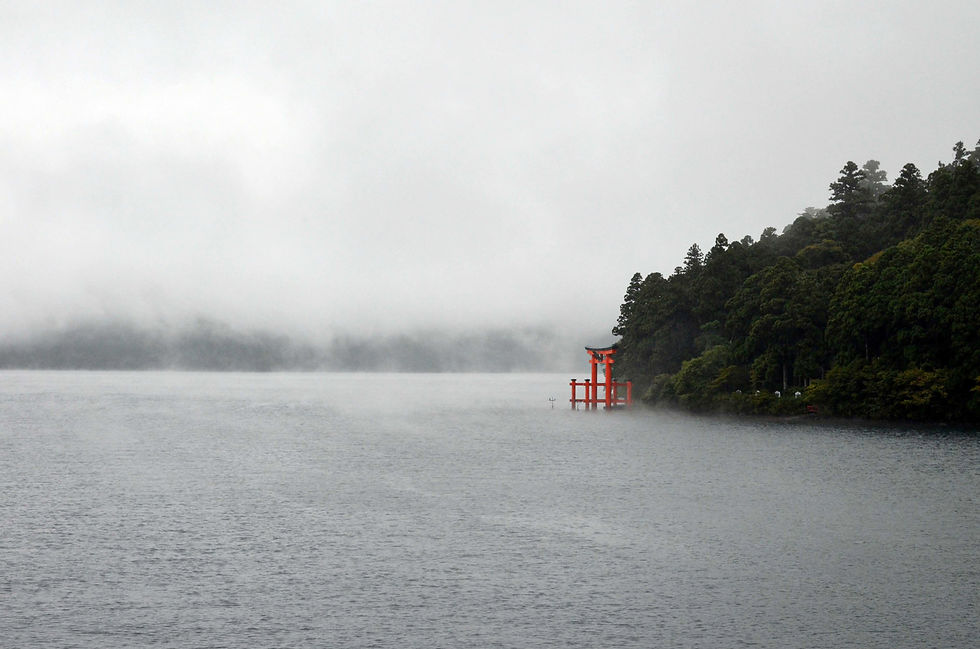
Image Source: Joanna Liu
Hakone is worth visiting year-round, and looks different depending on the season. You'll find cherry blossoms in spring, colourful maple leaves in autumn, lush greenery in summer, and beautiful snow during the winter. Due to its elevation, to tends to be a bit cooler than Tokyo, which makes it the perfect escape from the summer heat. Visibility of Mt. Fuji depends on the season, winter provides the clearest skies, and summer has the most amount of rainfall. Generally speaking, you'll have a 60% chance of seeing Mt. Fuji on any given day. However, it's worth noting that people don't go to Hakone specifically to see Mt. Fuji, it's such a beautiful area with so much to see and do, so you're guaranteed to have a lovely time even if you experience cloudy or rainy weather.
🌸 Cherry Blossoms
Early April
🍁 Autumn Leaves
Mid-November
☀️ Summer
June - August
Average daytime temp. 30°C
Lush and green environment
Mid-June to mid-July is the rainiest time of year
❄️ Winter
December - February
Snowfall: 3-4 times per month
Winter provides the clearest skies for views of Mt. Fuji
Navigating Around Hakone

Image Source: Hakonenavi.jp
Introduction
Hakone is made up of 4 main areas: Hakone-Yumoto, Moto-Hakone, Togendai, and Gora. Collectively, these 4 areas and their attractions are known as the Hakone Loop and are connected via a mountain bus, a pirate cruise ship, some cable cars, and a mountain train. Although it seems somewhat daunting, travelling to and around Hakone is relatively straightforward thanks to an efficient and well-designed transportation system.
The Hakone Free Pass
The best way of travelling around Hakone is by purchasing the Hakone Free Pass, this enables free travel on all the buses, boats, trains, and ropeways in the Hakone Loop area, including the trains into Hakone from Odawara Station. It only costs ¥6000, provides unlimited travel for 2-3 days, and includes discounts for some local attractions. If you're intending to do a round trip from Tokyo, there's an additional tier that provides a discount for the Shinkansen from Shinjuku to Odawara which costs ¥7300. If you do the whole Hakone Loop, then the Hakone Free Pass will save you about ¥1000-2000 compared to paying for the individual tickets.
Hakone-Yumoto
Yumoto → 40 Minute Bus → Moto-Hakone
Yumoto → 40 Minute Train → Gora
Yumoto is the gateway to Hakone and is served by the Hakone-Yumoto train station. It's a small town, but it has more restaurants, souvenir shops, and public onsen compared to the rest of Hakone. You'll find accommodation to be slightly cheaper here because Yumoto is about 40 minutes away from Hakone's main attractions, so people tend to prefer staying in one of the other areas. Spending a night in Yumoto can be a convenient choice if you have a lot of luggage, or if you're arriving in the late afternoon and don't have time to travel further before checking into your accommodation. The Hakone-Yumoto Station has storage lockers, and most hotels will be happy to store your luggage for free before and after check-out.
Moto-Hakone
Moto-Hakone → 25 Minute Boat → Togendai
Moto-Hakone (and Hakone-Machi) is a small settlement at the south-eastern end of Lake Ashi. This is the destination for the mountain bus from Yumoto and where you'll find the cruise ship port and a variety of attractions such as:
An Edo-period military checkpoint
Beautiful viewpoints
The Narukawa Art Museum
The Hakone Shrine & torii gate
You can easily walk around this area and check out all of those attractions, but a bus also runs between the two ends of town if you want to save your energy.
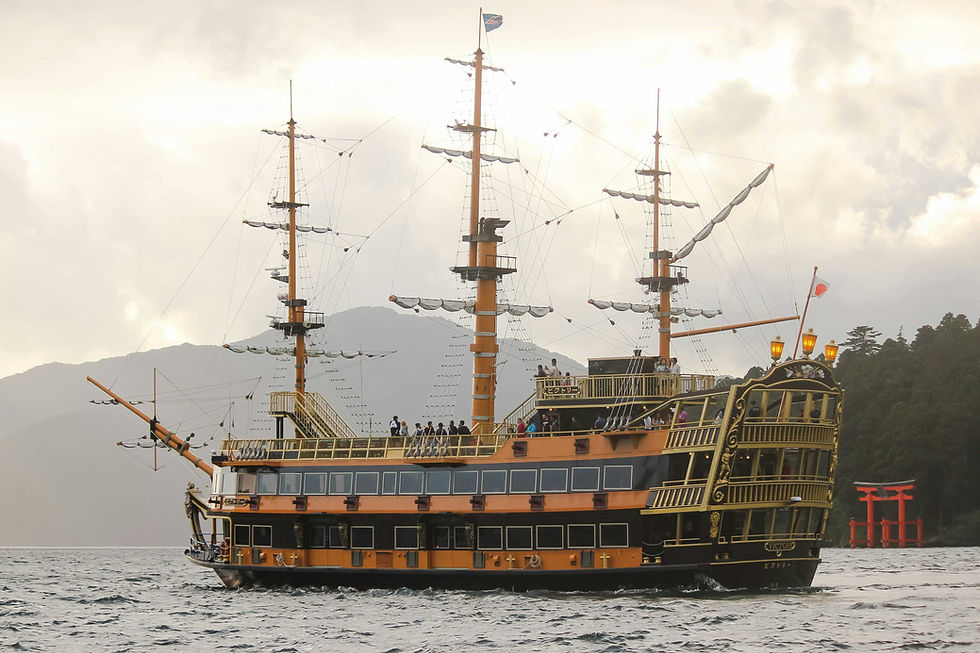
Image Source: Andres Dallimonti
Togendai
Togendai → 20 Minute Cable Car → Owakudani Valley
Owakudani Valley → 10 Minute Cable Car → Gora
Togendai is located at the northern end of Lake Ashi and features a visitor centre, a ropeway station that heads up to Owakudani, and a cruise ship port. There are a variety of nice hotels scattered around the area, and it's the only location that offers a highway bus to and from Shinjuku.
Gora
Gora → 40 Minute Train → Yumoto
Gora is a small town that is most famous for its museums, onsens, and parks. The most famous attraction here is the Hakone Open Air Museum, which draws visitors from all over Japan. Gora has a wide range of hotels and ryokans, many of which are aimed at providing an up-market luxury experience.
The Best Things To Do In Hakone
1.
Experience Hakone's Famous Onsen

Image Source: Hotel Green Plaza
The hot springs are one of the most famous aspects about Hakone. The rich mineral water and volcanic geography creates the ideal environment for soothing onsen baths. Hakone is full of both public and private onsen. Yumoto has the highest number of public onsen, but they can be found in all 4 areas discussed in this article. For private onsen, we recommend scrolling through our list of the best luxury accommodation in Hakone. For public onsen, these are our top two recommendations:
The Hotel Green Plaza
Public Hours: 1pm - 6pm
Public Admission: ¥1600
The onsen in this hotel provides the absolute best views of Fuji on a clear day, and you don't need to be a guest at the hotel to experience it. It's located halfway up the ropeway, and is quite easy to get to. If you have the time, it's worth spending a night here, it's pretty cheap too compared to similar options, you can check availability here.
The Tenzan Onsen
Public Hours: 9am - 10pm
Public Admission: ¥1500
The Tenzan Onsen is a beautiful collection of hot spring pools with a variety of temperatures, most of which are outdoors. The outdoor environment is lovely and well-designed, and the building itself has charming and traditional architecture.
2.
Walk Around Lake Ashi

Image Source: Bakery & Table Hakone
Lake Ashi is the most scenic area in Hakone, and a beautiful place to walk around and take in the natural environment. Walking from the bus stop and ferry port to the Hakone Shrine takes about 40-60 minutes depending on the route. Along the way, you'll find lovely viewpoints, shops, and restaurants. The Bakery & Table Cafe is our top recommendation, it provides stunning views, good food, and nice matcha.
The Bakery & Table Hakone
Price: ¥1000-2000
Hours: 9am - 5pm
3.
Visit The Hakone Shrine & Torii Of Peace

Image Source: Koon Chakhatrakan
The Torii of Peace is one of the most famous attractions in Hakone thanks to its photogenic position on the banks of Lake Ashi. The torii is part of the Hakone Shrine, which is located deeper in the forest via a long set of stairs. The torii becomes notoriously busy during the day, so if you want to avoid the crowds then it's best to get here early, or wait until after 5pm. There's a nice humble udon restaurant between the torii and the shrine in case you get hungry.
The Hakone Shrine & Torii
Cost: Free
Opening Hours: 24/7
4.
Cruise Along Lake Ashi

Image Source: Koon Chakhatrakan
The sightseeing cruise ship between Hakone-machi and Togendai is not only a method of transport between the two areas, it's also a fun and scenic way to experience the famous lake. The boats run every 30-40 minutes and no reservations are required.
Lake Ashi Pirate Cruise
Opening Hours: 9am - 5pm
Cost: ¥1200 (included with the Hakone Pass)
5.
Enjoy Views On The Ropeway

Image source: Tiny Urban Kitchen
The ropeway that runs up the mountain from Togendai is an amazing way to get panoramic views of Hakone and Mt. Fuji. The ropeway has 3 stops:
Ubako station, where you'll find some hot springs and hotels.
Uwakadani Valley, where you'll find volcanic steam vents and the black onsen eggs.
Sounzan Cablecar Station, a viewpoint for the Gora area and a transfer point for the Gora cable car.
Along with being a scenic experience, the ropeway and cablecar are the main method of transport between Togendai and Gora. The entire ropeway journey takes about 30 minutes, and the cablecar takes around 10 minutes.
The Hakone Ropeway
Opening Hours: 9am - 4:30pm
Cost: ¥1500 (included with the Hakone Pass)
6.
Volcanic Eggs At Owakudani Valley
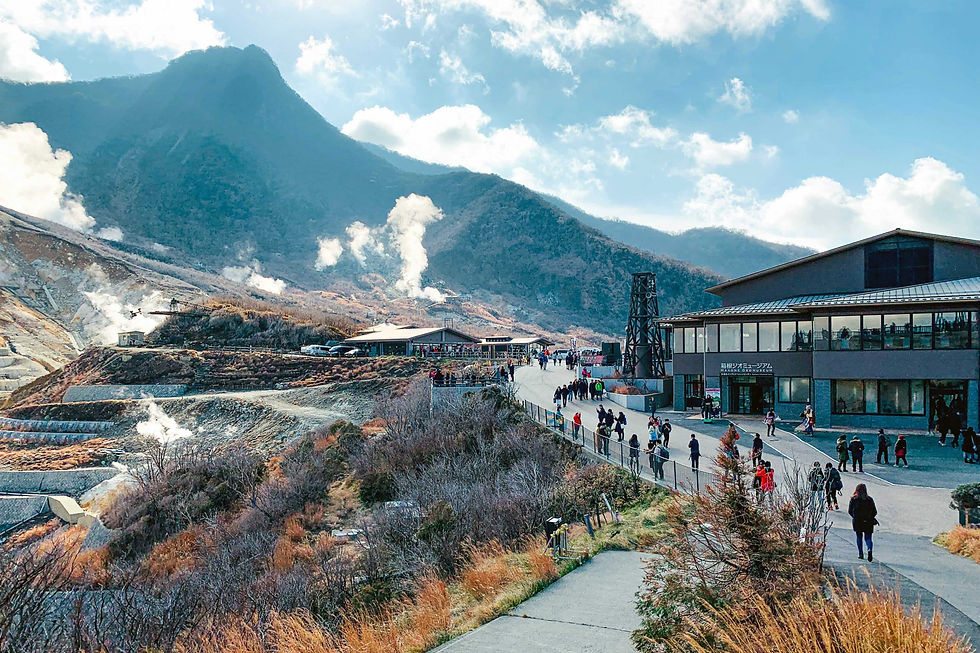
Image source: Yusheng Deng
The Owakudani Valley is a geothermic area full of smouldering volcanic vents. The terrain and environment is unique and interesting, and it provides a nice halfway point when travelling between Gora and Togendai. The area is well-known for its black volcanic eggs, which have been cooked in the sulphur-rich geothermal waters, causing the eggshell to turn black. You can purchase the eggs at souvenir shops and restaurants around the ropeway station.
Owakudani Valley
Opening Hours: 9am - 4pm
7.
Explore The Hakone Open Air Museum

Image source: Open Air Museum
The Hakone Open Air Museum is one of the most impressive museums in Japan. It's a vast open space with a variety of sculptures, installations, and interactive exhibitions, along with indoor venues that showcase a variety of artists. The museum has various different sections, one notable example is the Picasso Hall, which showcases two stories full of sculptures, paintings, and photos of the artist at various stages of his life. Along with the artwork, you'll also find some nice shops, cafes, and a kids' area where children can play with the exhibitions. It's only a 10-15 minute walk from Gora station, or just a 2-minute walk from the neighbouring Chokoku No Mori station.
The Hakone Open Air Museum
Opening Hours: 9am - 5pm
Cost: ¥2000*
*1900 with the Hakone Pass
8.
Stay At A Ryokan Or Hotel

Image source: The Fujimi Terrace
Although it's common to do a day-trip to Hakone from Tokyo, spending 1-2 nights in a ryokan or hotel is the absolute best way to experience this beautiful area. The ryokans in Hakone are renowned for their hot springs, high standards of traditional luxury, and charming environment. There are a variety of options to suit all budgets, but all the choices can be a bit overwhelming, so we created two articles showcasing a carefully selected list of the best ryokans and hotels within the Hakone Loop area.
FAQ
Is it worth getting a tour guide in Hakone?
Hakone is an amazing area filled with a rich history, incredible restaurants, and many hidden gems. If you want to take the burden out of planning, gain a deeper understanding of the various attractions, and maximise your time here, then a tour guide is the best option. Early bookings are essential if you're travelling during the cherry blossom or autumn leaf period.
How long should you stay in Hakone?
One of the best things about visiting Hakone is its flexibility in terms of how much time you spend here. Although 1 night and 2 days is enough to see everything, ideally, you should spend at least two nights here. This is because the ryokans and hotels are a big element of Hakone's appeal, and two nights allows you to truly relax and unwind. Alternatively, if you're pressed on time, Hakone can be done as a day-trip from Tokyo - you can easily leave Tokyo at sunrise, experience the entire Hakone Loop, and then return to Tokyo in the evening.
Which area should you stay in?
This aspect is very subjective and depends on your itinerary, travel plans, and personal preferences.
Moto-Hakone is best for lakeside views and easy access to the Hakone Shrine.
Togendai is best for escaping the crowds.
Gora is best for up-market accommodation, easy access to Owakudani and the train to Hakone-Yumoto, and the open-air museum.
Hakone-Yumoto is best for easy transfers, public onsen, and cheaper accommodation.
How do you avoid the crowds?
A large portion of Hakone's traffic is from day-trips from Tokyo, so it tends to get much busier after 9 or 10am. You can get ahead of a large portion of the crowd if you catch the earliest train to Odawara, and head to the Hakone Shrine (Moto-Hakone) as soon as you arrive. The shrine is the busiest attraction because it's a small area, by getting to the shrine first, you'll beat the usual flow of tourism and be free to explore the rest of Hakone outside of the peak visiting times. Alternatively, if you're spending the night in Hakone, then visiting the shrine at sunset is also a great option as most people leave by 5pm.
Should you do the loop clockwise or counter-clockwise?
This depends on what time you're arriving, whether or not you're staying at a hotel, and which area your hotel is located. Clockwise is often considered to be the better option. If you're aiming for a day-trip of the Hakone Loop and travelling during peak times, then it's best to get the bus ride done at the start of the day. In comparison, the train between Gora and Yumoto is less crowded, more comfortable, and more scenic than the bus, so people like to save it for the end of the day. You'll also have a higher chance of seeing clear skies in the morning compared to the afternoon, which might offer nicer views of Lake Ashi and Mt. Fuji.
Will you be able to see Mt. Fuji?
Views of Mt. Fuji are one of the attractions of visiting Hakone, but it's highly dependent on the weather. The probability of clear skies, and a clear view of Mt. Fuji, is broadly speaking about 50/50. You have a higher chance of clear skies during winter, and a lower chance during summer. Although Fuji views are amazing, Hakone's main attractions are its onsen, museums, and volcanic environment. If you're specifically searching for views of Mt. Fuji, you'll find a better vantage point at Lake Kawaguchiko.
Is the Hakone Pass worth it?
The Hakone Pass is worth the money if you're intending to do the Hakone Loop. You'll save anywhere from 1000-2000 yen compared to purchasing the individual tickets. It's also convenient because you won't need to purchase additional tickets, and you'll receive small discounts from popular attractions, cafes, and restaurants. It's the best way to explore the area.


