A Complete Guide To Visiting Hiroshima
An expert overview to help you experience Hiroshima

Photo Source: Ian Cowe
Overview
Hiroshima is possibly the most well-known and overlooked sightseeing destination in Japan. It's the most common destination for people to skip when planning their itinerary, but for the people who visit Hiroshima, it often ends up as one of the biggest highlights of their entire trip.
Hiroshima is so much more than just the Peace Memorial Museum and the Atomic Bomb Dome, it's a beautifully designed city filled with awesome food and friendly people, and it provides access to the amazing island of Miyajima. Some people skip Hiroshima because they don't want the emotional toll of the Memorial Museum, which is understandable as it can be quite heavy, but Hiroshima is worth a visit even if you skip the Museum. The food is great, Miyajima is awesome, and the Peace Park and the preserved Atomic Bomb building create a nice atmosphere - they showcase a city that has emerged from the destruction of WWII and evolved into a lovely place to visit, emphasising a positive vibe and relaxing environment.
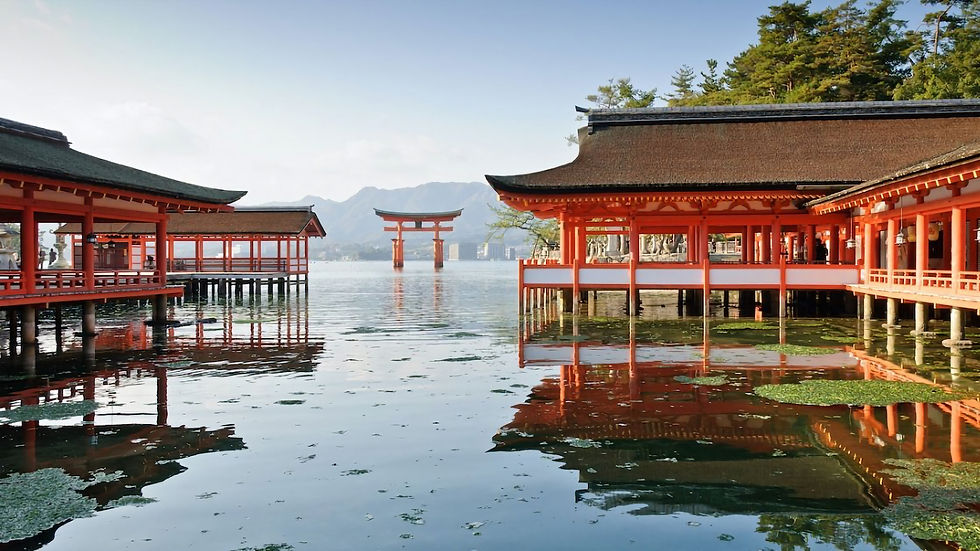
Miyajima Island is often considered the biggest highlight of Hiroshima, the island is famous for its torii gate that appears to be floating on the water. It's also home to friendly deer chilling in the streets, market stalls offering cocktails, craft beer, and awesome street food, some really cool temples, and the Mt. Misen hike with gorgeous views and fun terrain.
Table of Contents
FAQ
The Best Things To Do In Hiroshima
Frequently Asked Questions
What's the history of Hiroshima and the atomic bomb?
Early History
Hiroshima was founded in 1589 as a castle town during Japan’s feudal era (roughly the 12th to 19th centuries). A castle town is a type of settlement that developed in Japan during the feudal period, built around a castle that served as the political, military, and administrative center for the surrounding region. The city flourished as a hub for trade in the region and was a modern industrialised city by the end of the 19th century.
The Atomic Bomb
On August 6, 1945, during World War II, Hiroshima became the first city to be hit by a nuclear weapon. The atomic bomb, dropped by the United States, caused unprecedented destruction, killing approximately 70,000 people and a further 70,000 by the end of the year, devastating the city. Despite the tragedy, the event sparked global calls for nuclear disarmament.
Why was the atomic bomb used on Japan?
There were a combination of factors that led to the atomic bomb being dropped on Japan. Some of these factors held more weight than others, but they all contributed towards this difficult decision.
Japan's Refusal to Surrender
Despite overwhelming signs of defeat, Japan was the final country to refuse to surrender at the end of WW2. People often refer to Japan's historical belief of bushido - an ideal that views surrender as dishonourable, cowardly, and disloyal. But the main reason was actually due to the government officials that were desperate to hold on to power, too ashamed to admit defeat, and didn't want to answer to war crimes. The US demanded unconditional surrender due to the actions, beliefs, and structure of Japanese military rule. After invading China and South Korea, and committing war crimes there on the same level as the holocaust, the US and its Western Allies wanted to prevent these horrific events from ever occurring again - and unconditional surrender was required to dismantle Japan's military, imperialistic government, and establish democracy.
It's important to note that the actions of the Japanese government in WW2 did not truly reflect the beliefs of the people, it was not a democracy, it was a country which had been ruled by warlords for hundreds of years. The Japanese government was willing to sacrifice an unbelievable amount of innocent Japanese civilians for unjustifiable reasons and in the face of certain defeat, as evidenced by the tragic second atomic bomb dropped on Nagasaki 3 days later..
Ending the War Swiftly
After years of brutal conflict, the U.S. sought to avoid a prolonged war by delivering a decisive blow with overwhelming impact. The use of atomic bombs was intended to shock Japan into immediate surrender, avoiding a costly land invasion that could have resulted in millions of casualties among Allied and Japanese forces.
Target Selection: Why Hiroshima
Hiroshima was selected because it was a major industrial and military hub, with facilities supporting Japan's war effort, including troop movements and supply routes. Its relatively untouched state meant the bomb's full destructive power could be demonstrated, sending a clear message to Japan and the world.
Demonstrating Military Power & Prevent Soviet Expansion
The U.S. wanted to showcase its new weapon's power to both Japan and the world, especially the Soviet Union, which was emerging as a post-war rival. This was also a strategic move to establish the U.S. as a dominant global superpower. The U.S. was aware of the Soviet Union’s intention to enter the war against Japan. Dropping the atomic bomb was a way to force Japan's surrender before the Soviet Union could claim influence in East Asia.
The goals of rebuilding Hiroshima
Hiroshima rebuilt itself as a symbol of peace and resilience. The new Japanese government, with international support, focused on transforming Hiroshima into a model for urban development, a shining advocate for global peace, and the perfect example for promoting nuclear disarmament. The Peace Park was established at the heart of the bomb site to symbolise these values.

Hiroshima Castle was reconstructed after the atomic bomb. Photo Source: Jcastle.info
Should I skip the Peace Memorial Museum?
This really depends on personal preference. The Memorial Museum can be discouraging for some people due to its emotional context, but many people find the museum worth the visit, it sets the stage to see how marvellous the city has become. The Museum is really interesting and tells the history of the atomic bomb in an intriguing and engaging manner. There are some sections that dwell too much on the victims of the bomb, but you can just move swiftly through these sections if you prefer. After the museum, you exit into a beautiful park filled with happy people, which is quite uplifting. In the end it provides some great context around Hiroshima and the significance of the Peace Park. Although, it's not entirely necessary to include the museum if you're not in the mood for that kind of thing, especially if you're already well-versed on WW2 history. You can still have a lovely trip just by enjoying Hiroshima's food, the Peace Park, and the Island of Miyajima.
How many days do you need for Hiroshima and Miyajima??
Hiroshima is quite a flexible destination when it comes to the time commitment. Ideally you need 2 days, one for Hiroshima and one for Miyajima, but if you're really short on time and manage to wake up early then you could do it all in one day. The best itinerary would be staying one night in Hiroshima, and then staying one night on Miyajima. The Shinkansen to Hiroshima will take 1 hour and 40 minutes from Osaka and Kyoto.
Where's the best place to stay in Hiroshima?
The hotels in Hiroshima have some amazing discounts outside of the peak cherry blossom and autumn periods, with discounts of upto 75% compared to the normal peak hotel rates. We wrote this article to showcase the best hotels in Hiroshima based on customer reviews and convenient locations, check it out here: The Best Hotels in Hiroshima.

The Righa Royal Hotel in Hiroshima
Is it worth getting a tour guide in Hiroshima?
Yes. Hiroshima is an interesting city filled with hidden gems, amazing restaurants, and a rich history. If you want to take the burden out of planning, gain a deeper understanding of the various attractions, and maximise your time here, then a tour guide is the best option. A lot of tours combine Hiroshima and Miyajima, which is great if you want to save time on planning the ferry to Miyajima.
The 5 Best Things To Do In Arashiyama
1.
Visit the island of Miyajima
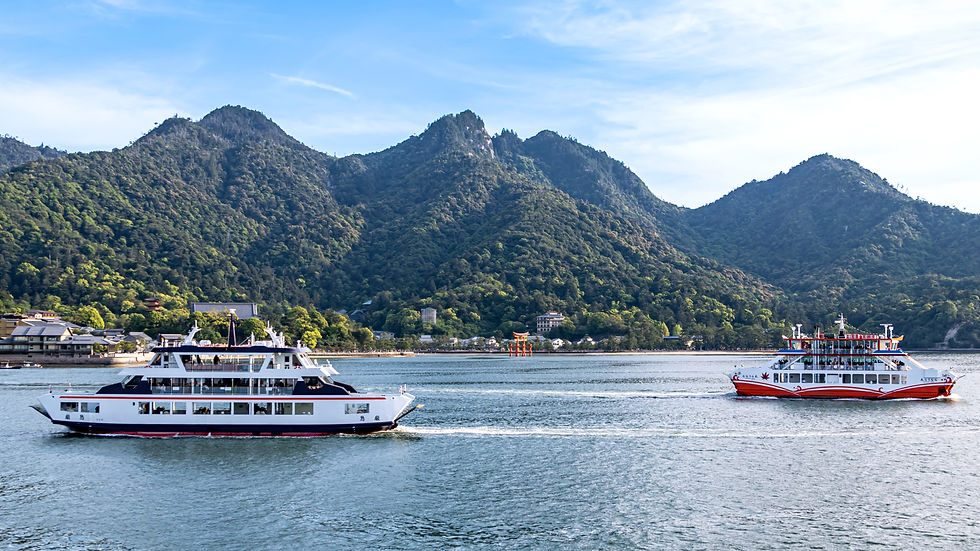
Miyajima, also known as Itsukushima, is famous for its torii gate that appears to be floating on the water. It's the most popular reason for people to visit Hiroshima. Miyajima is a wonderfully charming island filled with amazing temples, friendly deer reminiscent of Nara, and a wide variety of shops and market stalls offering lovely cocktails, craft beers, and specialty oysters. The Itsukushima Shrine is the main attraction, featuring a number of halls and walkways surrounding the famous torii gate resting on the water. Another highlight is the Mt. Misen hike which takes you up to the tallest peak on the island and provides a lovely panoramic view of the ocean, various other islands, and Hiroshima City.
There are two ferries you can use to access Miyajima, one from the Peace Park, and one from Miyajima-guchi Station. The ferry from the Peace Park takes 45 minutes and costs ¥2200 one-way, departing every 30 minutes. The ferry from Miyajimaguchi takes 10 minutes and only costs ¥200, departing every 15 minutes.
Miyajima Island
Peace Park Ferry: 8:30am - 5:10pm
Miyajima-guchi Ferry: 5:45am - 10:30pm
2.
Walk around the Peace Memorial Park

Photo Source: Official Website
The Peace Park and the Atomic Dome building serve as an interesting and beautiful space to stroll around. It's a large area consisting mainly of the Atomic Bomb Dome, the Peace Museum, and the Flame of Peace. You won't need to allocate too much time, you can easily cover the Peace Park with a 30-45 minute stroll.
The Peace Memorial Park
Opening Hours: 24/7
Cost: Free
3.
Visit the Peace Memorial Museum

The Peace Memorial Museum is a well-designed and modern museum dedicated to the history of the atomic bomb, the devastating effect of its detonation, the subsequent arms race, and the global effort to move away from nuclear weapons. It provides an interesting backstory for visiting Hiroshima, gives context into the goals for rebuilding the city, and why it became a focal point for discouraging the adoption of nuclear weapons. After the museum visitors enter the Peace Park which provides an uplifting tone to continue sightseeing.
The Peace Memorial Museum
Opening Hours: 8am - 6pm
Time: 90-120 Minutes
Cost: ¥200
Tickets: Reserve Your Tickets Online
4.
Check out Hiroshima Castle

Image source: Shutterstock
Hiroshima Castle is an often overlooked attraction which is perfect if you're visiting during the peak tourism period. The original castle was destroyed in the atomic bomb, and the new castle was built to be an accurate replica. What makes it impressive compared to other castle in Japan is it doubles as a museum that details the history of castles in Japan. The exhibits are well-designed and the content is quite interesting, making for a thoroughly enjoyable experience. The castle itself is very photogenic, especially during the sunset and sunrise.
Hiroshima Castle
Opening Hours: 9am - 5pm
Time: 30-45 Minutes
Cost: ¥400
5.
Eat Famous Okonomiyaki & Oysters

Hiroshima-style Okonomiyaki is famous throughout Japan. It distinguishes itself from other styles by including soba or udon noodles and layering the ingredients rather than mixing them all together. Downtown Hiroshima, only a 12-minute walk from the Peace Park, has an entire building dedicated to Okonomiyaki restaurants, called Oko-nomi-mura, with 4 levels and a total of 23 restaurants. The most highly rated of all these restaurants is Okonomiyaki Ron, located on the 3rd floor. It has a staggering average review score of 4.9 out of 5 stars, with over 600 reviews. You can find amazing Okonomiyaki restaurants all over Hiroshima, just check Google Maps and choose a place that's convenient for you and has a high average review score.
Hiroshima is also famous for its Oysters, being home to the largest oyster farms in Japan. This makes them extremely fresh, delicious, and served throughout most restaurants in Hiroshima.
Hiroshima Okonomiyaki & Oysters
Opening Hours: 11am - 9pm
Time: 30-60 Minutes
Cost: ¥1000 - ¥3000